
The Marty Supreme Jacket and Why It Worked
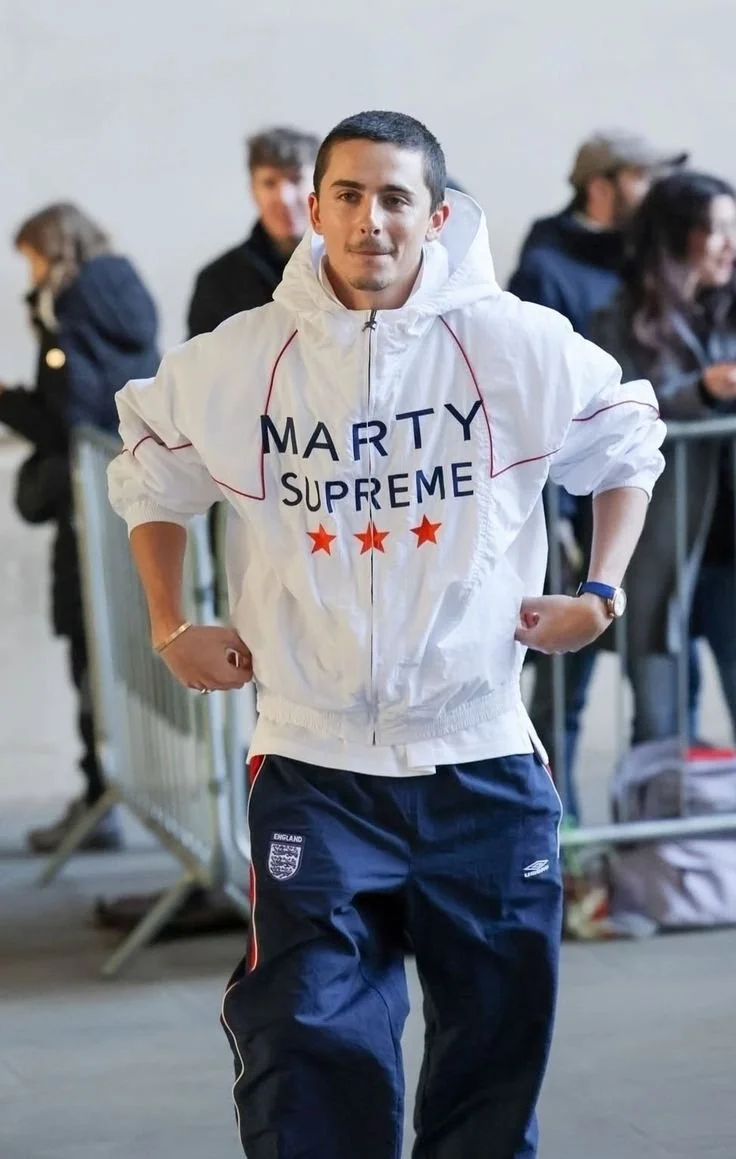
Timothée Chalamet pictured in London Marty Supreme promo, Mart Supreme jacket England - Tilda on Pinterest
The Marty Supreme jacket didn’t take off just because it looked good.
A lot of people wanted to wear it because of the way it looked, sure. But that alone doesn’t explain why it spread the way it did, or why it felt bigger than a normal jacket release.
What mattered the most was the function the jacket played.
Actually for most, it fell into what you’d call a fantasy-self purchase or an aspirational buy.
Something you don’t necessarily wear all the time, but something you want to own because of what it represents when you do wear it.
Nothing about the Marty Supreme jacket suggested it was meant to be worn all the time as casual wear.
The graphic is loud in a way that doesn’t disappear into routine. It’s bold, holds attention and feels intentional.
The kind of piece that shows up when something is happening, not when your’e just passing time.
And that’s why it was considered a success.
The jacket wasn’t trying to fit into the closet, no, it was trying to fit into a very specific type of moment.
Cold weather, Movement, Travel, Visibility.
Situations where being seen is part of the experience.
That’s why people on social media made comments similar to this:
“This would go crazy for snowboarding”
Not because snowboarding itself mattered, but because it captured the kind of environment the jacket made sense in.
The design supports that role borrowing from warm up gear, team jackets, and outerwear, clothing that usually signals purpose before personality.
There is not a need for context to make it feel official, the feeling it belongs somewhere just lingers.
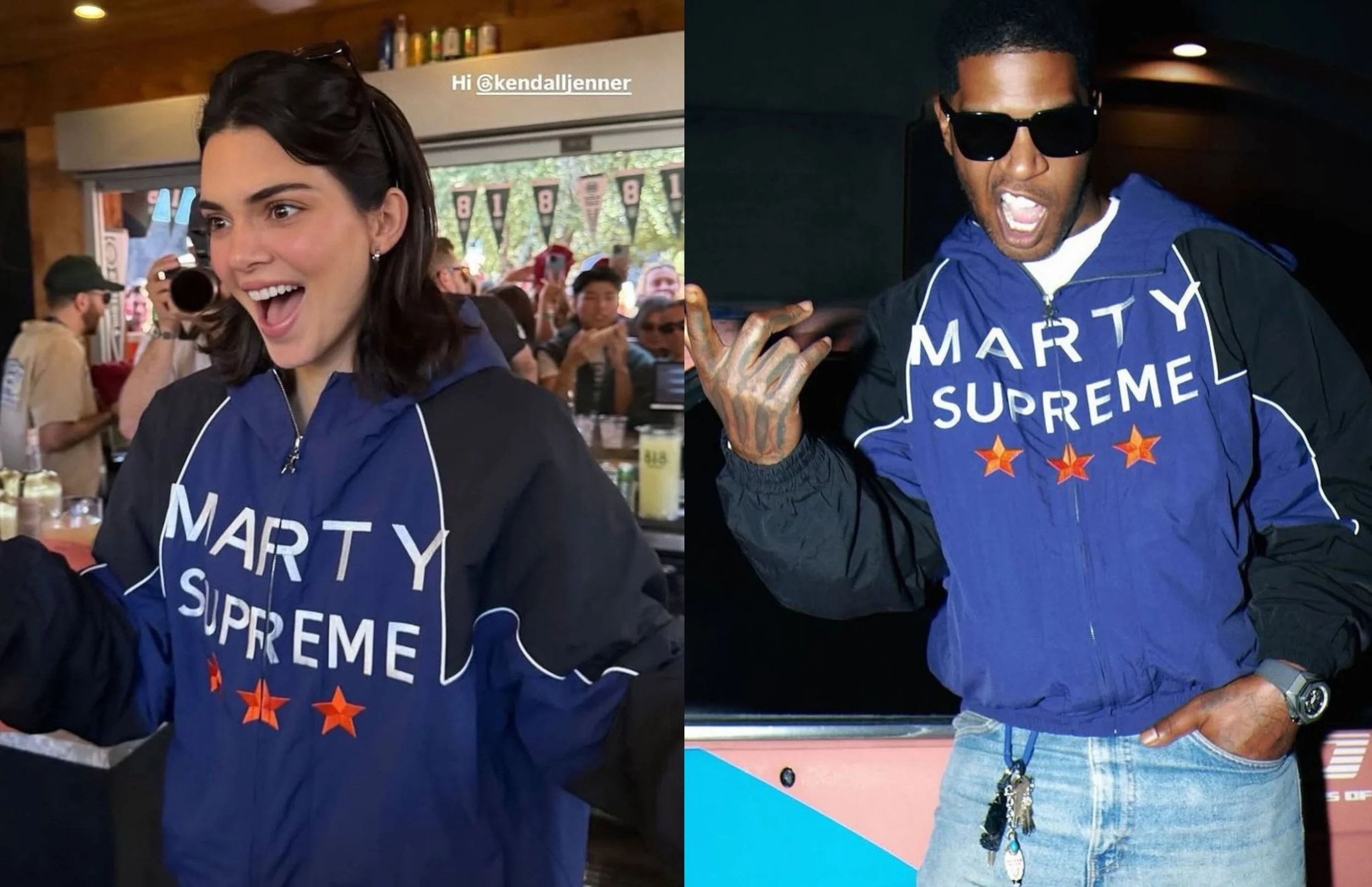
Celebrity placement helped clarify the role even further, making it not about copying an outfit or dressing the same way everyday.
It was about seeing the jacket worn correctly, in the right conditions, in the right situations, at the right time.
The celebrities didn’t make the jacket desirable they made it’s purpose a little more obvious.
Once purpose was clear, the internet took it from there.
People didn’t fall in love with the jacket because they wanted to live in it.
They fell in love with the idea of wearing it, maybe even only once, in a moment that felt worth capturing.
Online, that kind of clarity travels fast.
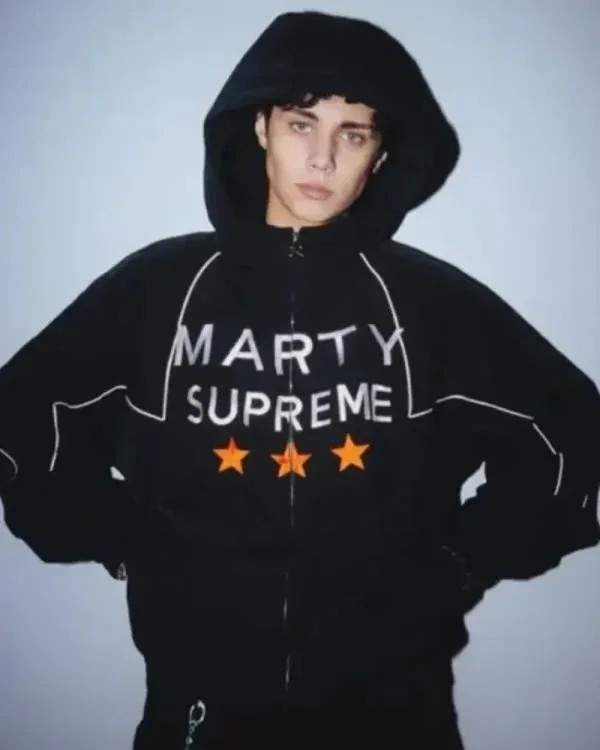
The Jacket is tied to Marty Supreme and its surrounding rollout, with visibility from people like Timothée Chalamet, who presence naturally pulls attention toward anything that is adjacent to him.
But here is the thing, most people didn’t care about the movie details when the jacket first appeared, they didn’t need to.
The object moved faster than the context. The jacket didn’t ask to be understood through plot, time period or narrative.
It worked before any of that information even became relevant.
Stay with me because that’s the important part, it shows the jacket wasn’t functioning as film merch.
It had it’s own functioning image, a standalone object that carried weight on its own. The origin mattering later the impact coming first.
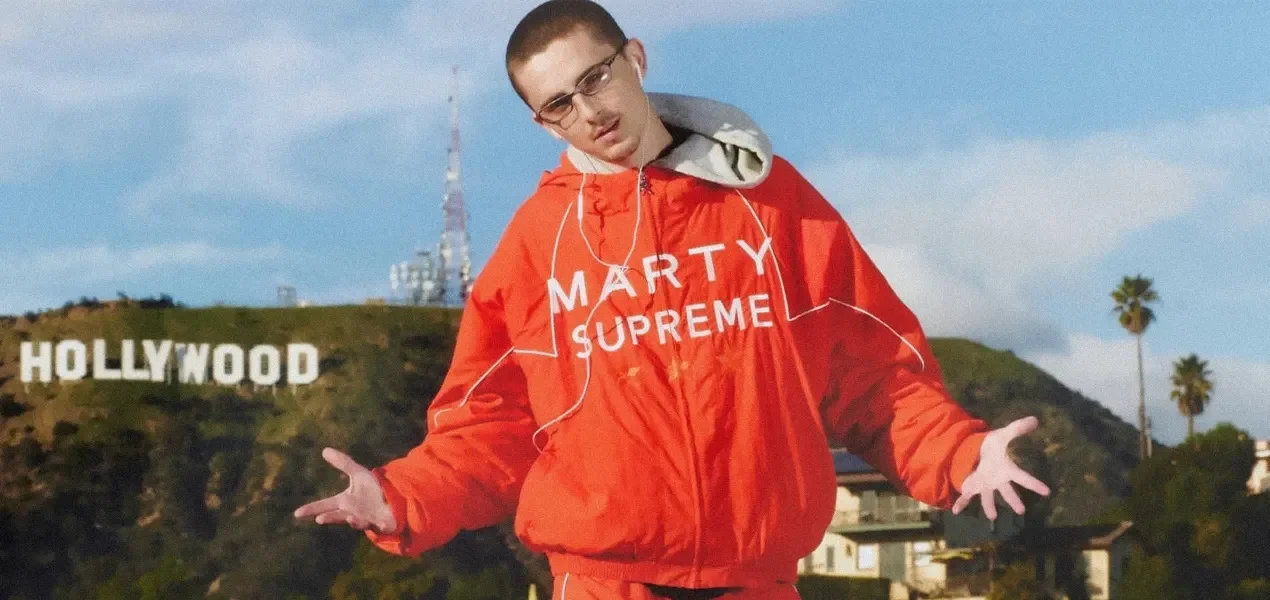
Celebrities don’t usually make people want clothes directly. What they do is remove hesitation.
When an object appears on someone highly visible, the question shifts from “Is this good?” to “Why is this already everywhere?”
There’s this broader idea worth understanding here: The concept of an industry plant.
In simple terms, it’s when a person or object appears to rise organically but has actually been positioned by industry access, resources, or relationships.
That doesn’t mean the thing isn’t necessarily good, it just means visibility arrived before a public demand.
Back to the topic, the jacket didn’t feel like it was being sold. It felt like it had already passed some invisible test, like it had been approved somewhere before the public saw it.
This is where desire creeps in, not through persuasion, but through confirmation.
Here’s the part people don’t like admitting.
Someone might say, “I know he bought that because his favorite celebrity wore it.” And they’ll say it confidently, like they’re above the influence.
There’s plenty of layers underneath that statement alone.
Let’s make something clear, most didn’t want the jacket because the celebrity wore it, the celebrity made it feel safe to want, that being the trick.
The influence isn’t emotional more structural if anything.
It bypasses taste entirely and works on certainty.
Even people who think they’re immune still fall for it, because it doesn’t feel like falling it just gets written off as noticing, making it effective.
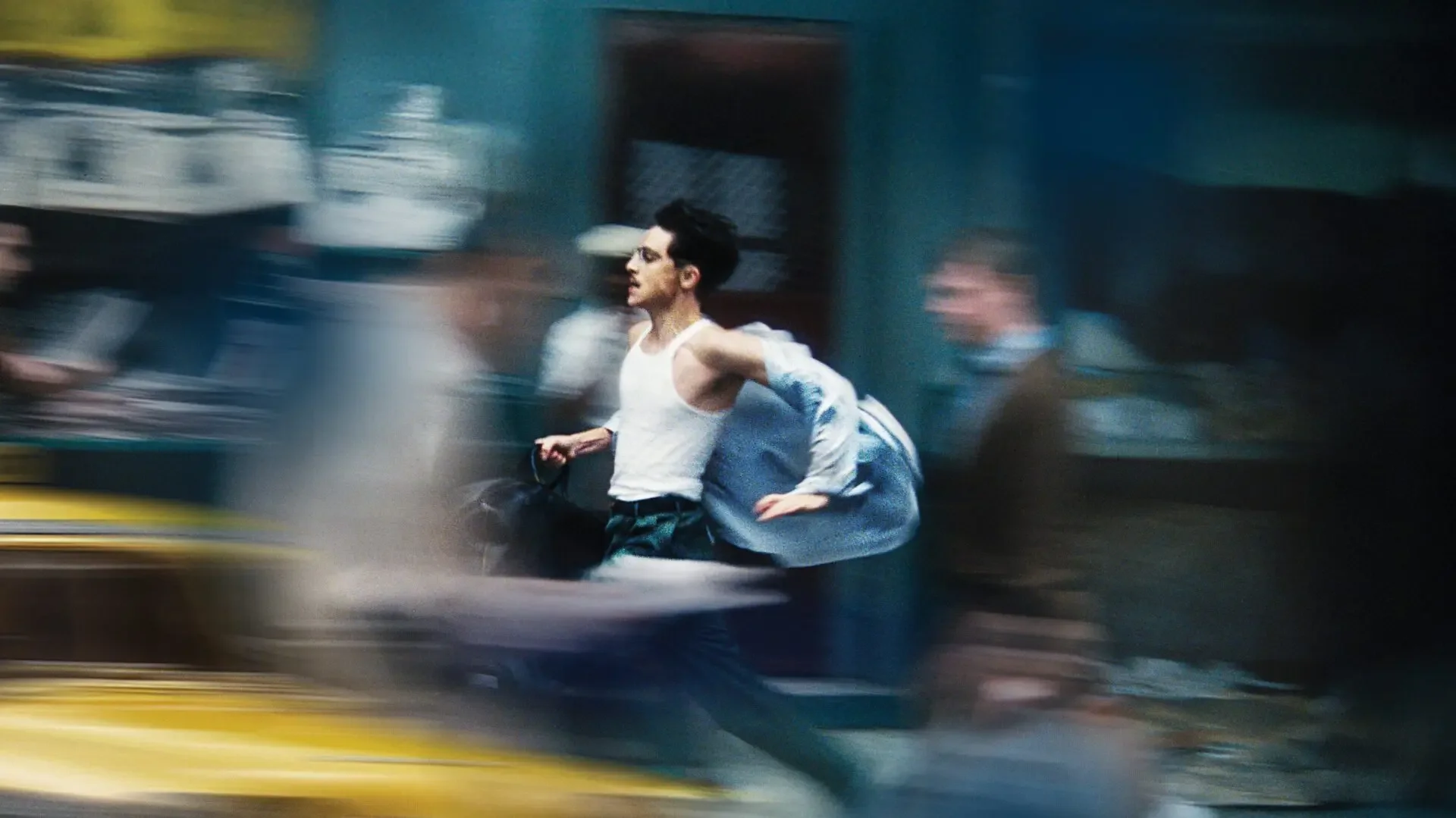
Here’s the funny part, the jacket doesn’t really connect to ping pong in my opinion, it doesn’t neccesarily connect to New York City in a literal way. And honestly, it doesnt even really connect to snowboarding either.
And thats the point, the jacket isn’t about accuracy, more about vibe alignment.
It looks like it belongs in movement, cold air, moments that feel cinematic, even if those moments aren’t scripted.
That’s the real reason it pulls attention.
It’s not tied to one activity or one story. It’s tied to a feeling which is being visible at the right time.
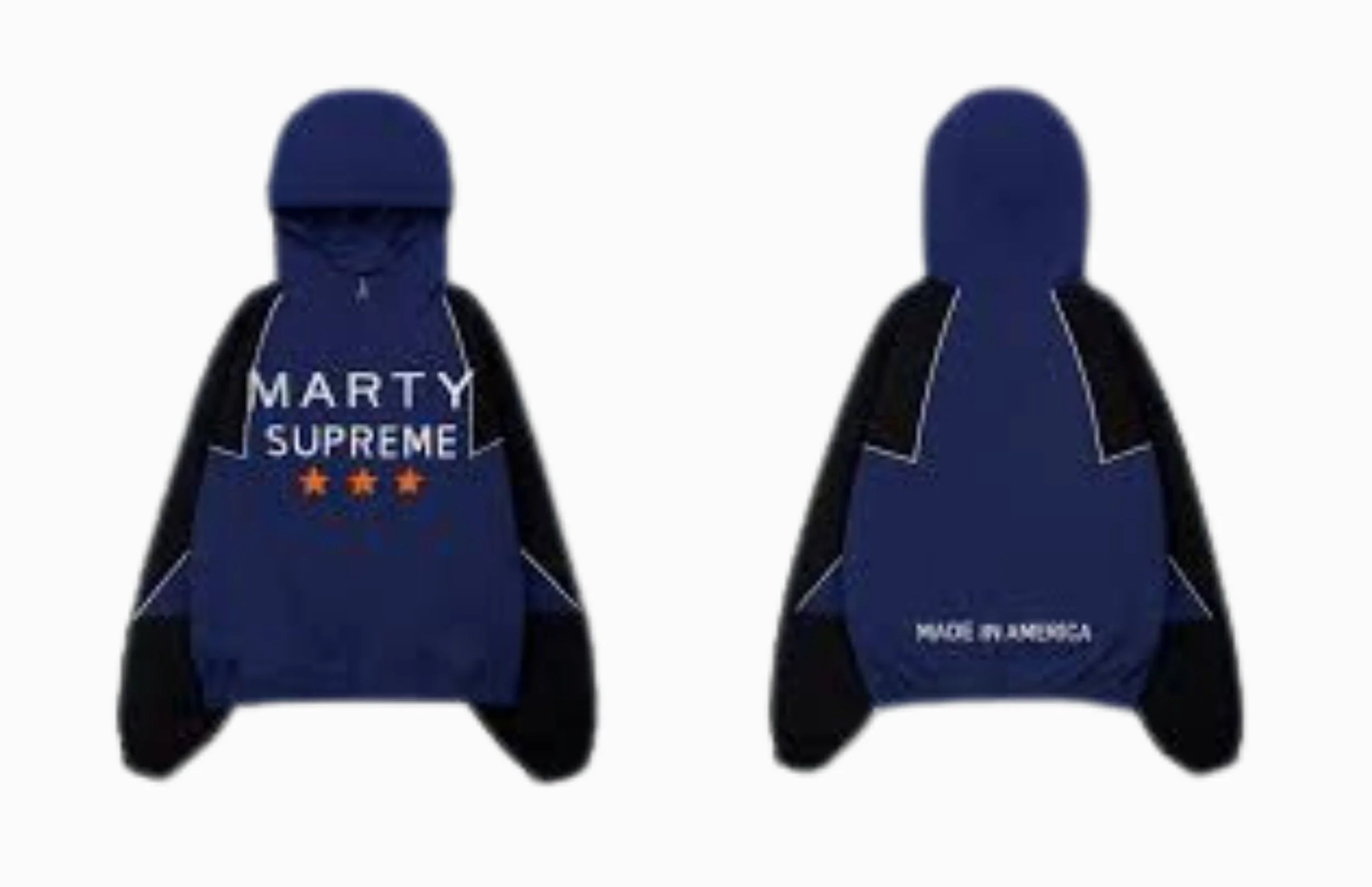
The Marty Supreme jacket worked because it understood something simple:
Not all clothing needs to be lived in, some clothing only needs to be imagined.
It didn’t try to be versatile, try to blend in, or try to last forever in the rotation, it tried to be right once.
Some pieces don’t win by being worn often, they win by being memorably.
The jacket didn’t create obsession by fitting into everyday life, it created it by fitting perfectly into a moment people wanted to step into, that’s why it worked.
