
How Clothing Quietly Controls Behavior
When One Changes, Others Follow:
A Field Study on Social Influence in Dress Behavior
Institute for Modern Dress
Research Paper Vol. 1 — 2025
Author: Connor Carmichael, Founder & Research Director
Dress as Social Alignment:
A Field Study in Conformity
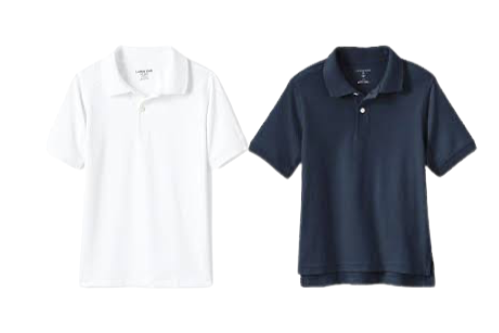
There are three colors students are allowed to wear at my school; navy, green, and white. In theory, that gives room for preference. In practice, one color rules everything, that color is navy. It is what students default to without thinking. It signals this sense of safety. It is what everyone else wears.
And because everyone wears it, it becomes the standard to which no one objects.
This creates the perfect environment to test a question at the core of modern dress:
Do people choose what to wear because it aligns with their personal identity, or because it helps them remained aligned with the group?
To find this out, I ran an experiment during a regular school week (Monday through Friday).
I asked one student, someone who is very well known, socially respected, and naturally visible to stop wearing navy and switch exclusively to white. No announcement was made. No explanation was given. The only thing that change was the shirt he wore.
On Monday, he showed up in white while almost everyone else remained in navy, few in green, as usual.
On Tuesday, nothing dramatic happened. Students had taken notice but there were no comments according to him.
On Wednesday however, two students walked in wearing white.
On Thursday, three additional students had switched. By Friday, a total of seven students had worn navy every day up to that point had replaced it with white.
There was no conversation about style. No new piece of clothing was released. Nothing external changed at all except for the fact one person made a choice which led to a response from others.
Conformity is not about choosing what looks best, it;s about choosing what feels safest in a social environment. It is the act of aligning with what is already accepted to avoid standing out or even risking a tiny bit of social uncertainty.
In the context of dress, conformity functions as an unconscious survival mechanism: the people do not wear navy because they prefer it, or maybe they dont, but its more because it confirms their place within a group.
The dominance of navy isn’t evidence of collective taste, but of collective agreement. The shift wasn’t about preference. It was about VISIBILITY.
When students saw someone they considered a reference point choose white, white became permissible. When more students followed, it became validated.
What was once the minority option quickly began to challenge the norm, not because white became more comfortable or fashionable, but because its social position changed.
This is the continuum of dress in real time. Clothing does not spread through individual decision making, rather it spreads through social imitation.
People do not wear what they like in isolation.
They wear what allows them to remain in step with what feels current, accepted, or ascending. The moment that perception takes a shift, then the behavior follows.
What this experiment proves is that dress is not an inward expression that moves outward. It is an outward signal that moves inward.
It’s social first, personal second it evolves not through personal identity, but through visible adoption by those who anchor the social environment
In less than one week, without a word spoken or a trend declared, one visible choice led seven others to change their behavior.
Not because white became more comfortable or more appealing, but because visibility shifted their perception of what was acceptable. People did not imitate a color, they imitated a person.
This is not just about fashion. It is about how we percieve identity, status, and belogning. Clothing is not fabric, it’s direction.
It tells us where the group is moving, who is leading, and how to remain algined.
We do not dress to express who we are anymore. We dress to postion ourselves in relation to others.
If that is true, then modern dress is not a style industry, it’s a behavioral system.
And any attempt to understand fashion must first begin by understanding the people.
This experiment confirms that dress is not a mirror held up to the self, it’s a tool we use to secure our place among others.
One visible individual shifted the behavior of an entire group without saying a word or even intending to influence.
Nothing about the garment changed. Only it’s social meaning did. And once that meaning shifted, not very far behind behavior followed. Visibility created permission. Permission produced imitation. Imitation reshaped the collective standard.
Dress is not something we control. It is something that quietly begins to control us.
We tend to believe we choose what we wear because it reflects who we are. Yet every signal we send through dress is calibrated against who we fear becoming if we fall out of alignment.
If you do not make an active choice, a passive one will be made for you. The moment you stop choosing your postion within the system, the system assigns you one. And once it does, it doesn’t just influence what you wear, it begins to shape who you are allowed to be.
This mechanism of modern dress: not personal expression, but orientation. Not identity radiating outward, but external influence moving inward. It does not begin with the individual and move to the group. It begins with the group and works its way into the individual.
If dress behaves this way in even the smallest environments, then what we cal “fashion” is not a cycle of creativity, it’s a cycle of social influence. It spreads not through taste, but through visibility and permission. And if we are unwilling or unable to recognize that, we are not choosing what to wear.
We are being worn.
To understand modern dress, we must first understand the force pulling the strings… conformity.
Why Conformity Occurs in Dress: The Psychology of Alignment
Conformity in dress doesn’t emerge because people lack individuality. It emerges because people need certainty. Clothing isn’t just what we throw on our bodies, it is how we secure our postition among other people. Before anything else, dress is a tool that answers one silent but constant question:
Am I safe here?
1. Dress Is Social Protection
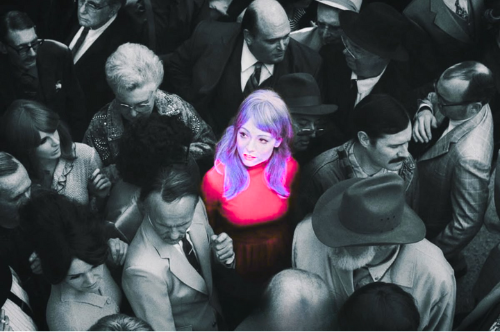
Humans don’t dress for fabric alone. We dress for approval, avoidance of risk, and protection from misinterpretation. To be visually “off” is to risk feeling exposed, not physically, but socially. In every environment, there is a dominant visual code. Following that code minimizes friction. Breaking from it, even slightly, introduces this sense of uncertainty.
We believe we are choosing an outfit when in reality we are most likely choosing a response from others.
2. Imitation Is Not Shallow, It’s Strategic
When people see someone with social presence or influence make a change, they don’t evaluate the item itself. They evalaute what it means now that this person has chosen it. The white shirt didn’t become more comfortable or more stylish. It became socially safe to wear.
This is not a fashion phenomenon. It’s quite frankly a human one.
When people imitate what someone wears, they’re not trying to copy a look, they are trying to inherit security.
3. Visibility = Power
Whoever is most visible has the most control over what becomes acceptable. They don’t set trends by declaration, they set them by quiet demonstration. They move first willingly or not, and others watch for cues, not to be them, but to not be left behind.
In this way, dress spreads the same way a direction spreads in a crowd. One person turns their head. Then another. And without a single word spoken, the entire group begins to move.
4. The Myth of Personal Style
People often say, “I wear what I like.” But preference is not formed in isolation, it’s formed in response to what feels current, respected, or rising. Oversized silhouettes, muted tones, and softened fabrics are not just physically comfortable, they signal social ease, and modern belonging.
Most people don’t chase uniqueness. They chase social invisibility, the comfort of not being questioned.
5. Conformity Reduces Psychological Load
There is a relief is not having to self negotiate every day. When the group has already established what is acceptable, adopting it lowers anxiety. It removes decision making pressure. It lets the mind move on.
Conformity does not always mean absence of choice. It means outsourcing choice in exchange for certainty.
Conformity in dress isn’t a glitch in modern culture, it is the mechanism of it. We dress not only to be seen, but to make sure we are not singled out. To avoid sending the wrong signal. To stay in rhythm with the environment around us.
People don’t dress to express their identity anymore. They dress more in a way to protect it.
If we want to understand modern fashion not as an industry but as a force, we have to stop asking “What are people wearing?” and start asking “Who are they aligning with?”
How Influence Is Created:
Why Certain Individuals Set Direction While Others Follow
Not everyone in a social environment holds the same level of influence… over what becomes acceptable to wear.
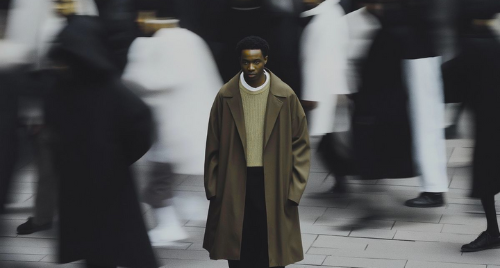
Influence in dress is not based on creativity or taste, but on visibility and perceived certainty. A person who is already socially established can shift the visual behavior of others simply by making a new choice.
That choice does not gain power because it is objectively better, it gains power because it is not seen. Once it is seen it becomes available. Once it is available, it becomes adoptable.
People do not follow simply because they admire the clothing itself. They follow because they read it as a signal of direction.
A visible individual is not evaluated on what they wear, but on what their choice might indicate about where the group is moving next. Influence functions as a form of prediction.
To align with the influential person is to stay ahead of potential social change; to ignore them is to risk falling behind it.
This mechanism turns dress into a directional system. The garment is not the point. The point is who wore it, when they wore it, and how others responded once it appeared.
A plain white shirt on one student means nothing. The same white shirt on the most visible student changes behavior within 72 hours.
Here is the problem: once dress begins to move through social influence rather than personal intention, individual choice becomes secondary.
Rather than deciding what to wear based on identity, people begin deciding based on anticipated group behavior.
This means culture is no longer being created through individual expression, it is being replicated through social positioning. Identity becomes responsive rather than generative.
This is not a surface level issue. It actually reveals that modern fashion does not operate as a marketplace of ideas, but as a hierarchy of visibility.
A small number of individuals set the direction. The rest follow to maintain alignment. When this happens unconsciously, dress stops being a tool of expression and becomes a tool of control.
The only functional solution is awareness.
Influence cannot be removed from dress, but it can be recognized.
Once recognized, it can be used strategically, either to align with the direction intentionally, or to redirect it with purpose.
To dress consciously is not to avoid influence, but to understand how it operates so that one’s appearance is chosen, not assigned.
Modern dress is not asking what you prefer. It is asking whether you understand the system you are participating in.
If dress determines social movement rather than merely reflecting it, then the real question is no longer “What are people wearing?” but “Who is deciding what becomes visible?”
The future of modern dress will be shaped not by fabric or trend, but by whoever controls perception, through media, celebrity, technology, or algorithms.
This shifts the study of fashion toward a study of power. What is worn is only the surface; what matters now is who sets the conditions under which certain choices become acceptable in the first place.
Understanding this is not the end of the investigation, rather it is the beginning of a new one.
Modern Dress Behavior SeriesVolume IFiled by: Connor CarmichaelFounder, Institute for Modern Dress2025